

Assessment data now available in iSAMS Central, expanding the future of school reporting
Schools can now bring their assessment data into iSAMS Central, creating a richer, more connected view of academic performance across their organisation.
As schools increasingly rely on data to guide teaching, learning and strategic planning, one challenge remains consistent: bringing information together from multiple systems and sources to create a complete picture of student achievement.
To help address this, assessment data is now available within iSAMS Central through a new dataset and reporting capability, enabling schools to analyse assessment information alongside other operational and academic data in a single reporting environment.
For schools using iSAMS Curriculum Manager module, gradebooks entries can be surfaced directly within iSAMS Central reporting. For schools that manage assessment information elsewhere, gradebooks data can also be imported using the external data import feature, extending access to the same reporting and analytical capabilities.
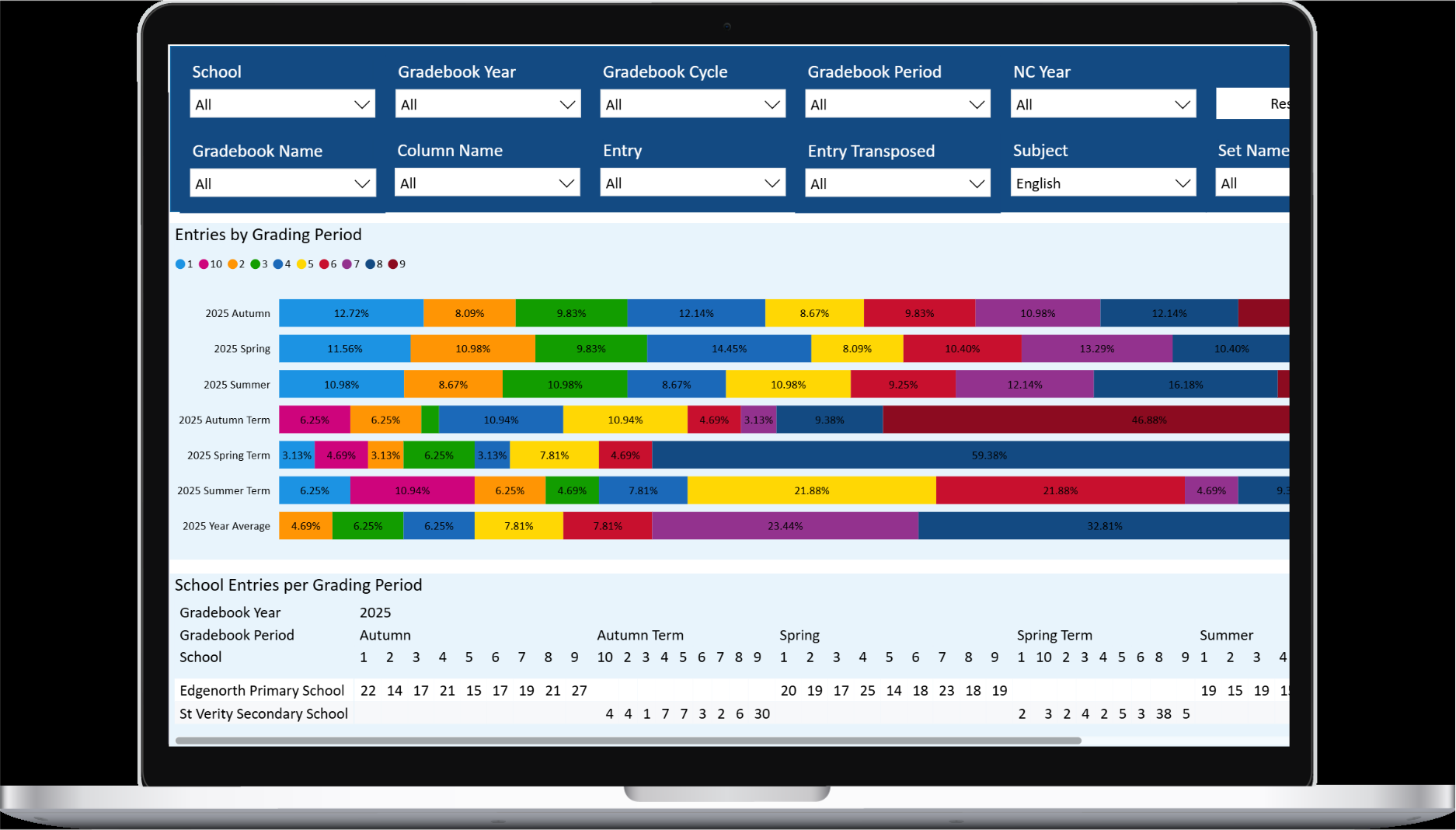
Turning assessment data into actionable insight
Assessment data is often one of the most valuable assets a school holds, but too often it exists in isolation.
By making this data available in iSAMS Central, schools can:
- Track attainment and progress trends over time
- Combine assessment data with wider school reporting
- Strengthen evidence-based decision making
- Provide school leaders with deeper insight into academic outcomes
- Reduce reliance on manual data collation and spreadsheets
The result is a more connected approach to reporting, giving educators and leaders faster access to the information they need to support students effectively.
Designed for multi-campus and school groups
For growing school groups and multi-campus organisations, consistent reporting has become increasingly important.
iSAMS Central enables organisations to bring together data from multiple schools into a single reporting framework, making it easier to:
- Compare performance trends across campuses
- Establish consistent reporting standards
- Support governance and executive reporting
- Benchmark outcomes between schools
- Identify areas of excellence and opportunities for improvement
By incorporating assessment data into this broader reporting ecosystem, school groups can gain greater visibility across their organisation while maintaining confidence in the consistency and quality of their data.
Bringing consistency to assessment reporting across school groups
For school groups and multi-campus organisations, consistent assessment practices are just as important as consistent reporting.
Alongside the ability to analyse assessment data in iSAMS Central, schools can now centrally manage key assessment and gradebook settings across multiple campuses. This helps ensure that grading structures, reporting frameworks and assessment configurations remain aligned, reducing administrative effort and improving data consistency across the organisation.
Rather than maintaining separate configurations at each school, group administrators can manage assessment settings from a central location and apply changes across multiple schools where appropriate. This creates a more standardised approach to assessment reporting, making it easier to compare outcomes, benchmark performance and maintain confidence in the quality of data being used for decision-making.
For growing school groups, this provides greater control over assessment frameworks while supporting a more unified view of student attainment and progress across the organisation.
Supporting the next generation of school reporting
The expectations placed on school leaders continue to grow. Boards, regulators, parents and education authorities increasingly expect decisions to be supported by accurate, timely and accessible data.
The future of school reporting is not simply producing more reports. It is about creating a connected data environment where information from across the school can be brought together, analysed and acted upon.
The addition of assessment data to iSAMS Central represents another step towards that vision, enabling schools to move beyond siloed datasets and towards a unified view of performance, progress and improvement.
As schools continue their digital transformation journey, having access to trusted, consolidated data will play an increasingly important role in supporting student outcomes, driving operational efficiency and informing long-term strategic planning.
For schools looking to build a more complete reporting framework, assessment data in iSAMS Central provides another valuable piece of the puzzle.